Behind the Blackout Curtains: Meet the Americans Building Private Figure Museums

Photo: Five artists from the Painting Academy and active at the Qing court: Chen Mei (陳枚) Sun Hu (孫祜) Jin Kun (金昆) Dai Hong (戴洪) Cheng Zhidao (程志道), Public domain, via Wikimedia Commons
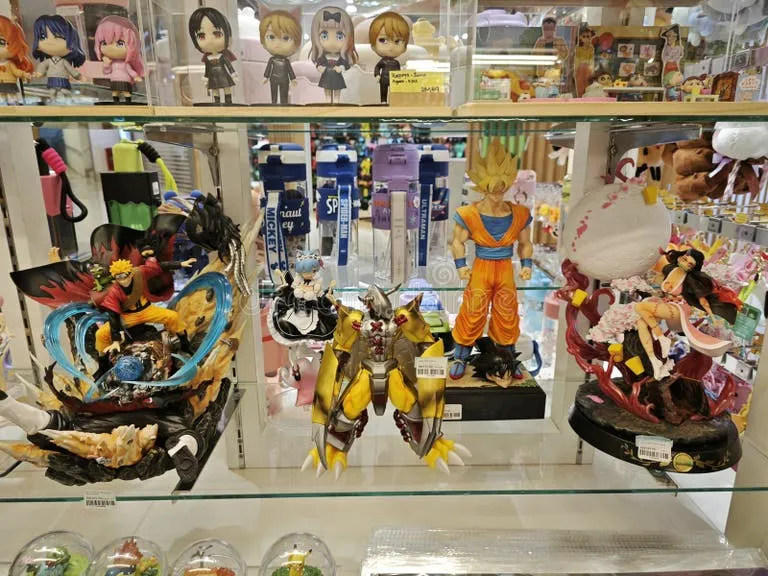
There's a moment, standing in Marcus Delgado's converted garage in Columbus, Ohio, when your brain does a hard reset. Four hundred anime figures glow under individually aimed LED spots. Glass cases run floor to ceiling. A hand-built acrylic riser system makes a 1/7-scale seraph appear to float mid-air. Nothing here is for sale. Nothing here is a store. This is, quite literally, someone's house.
"People ask if I run a shop," Delgado laughs. "No, man. This is just Tuesday."
Welcome to the quiet rise of America's private figure museums — spare rooms and garages transformed into galleries that would make mid-tier anime stores nervous.
From Shelf to Sanctuary
The shift happened gradually, then suddenly. A decade ago, the average US collector displayed figures on a bookcase next to DVDs. Today, a thriving corner of the hobby treats display as an art form in its own right — museum-quality glass, humidity control, UV-filtering film on windows, and lighting schemes that get debated with the intensity of fantasy football trades.
Delgado, 38, a project manager by day, spent two years and what he cheerfully calls "a used Civic's worth of money" building his space. His collection leans heavily into celestial and angel-themed figures — fitting, he says, for a room his friends have nicknamed "the chapel."
"The halo stuff isn't an accident," he says. "There's something about winged characters under warm lighting that just hits different. My wife walks in and goes, 'It looks like a cathedral for plastic.' She's not wrong."
Three Curators, Three Philosophies
Delgado represents one school of thought: the maximalist. Every wall is used, every figure has a spotlight, and the effect is overwhelming in the best way.
Across the country in Portland, Oregon, Renee Takahashi runs the opposite experiment. Her spare room holds just 43 figures — each one granted nearly a foot of breathing room on matte-white shelving. "Scarcity of space forces intention," she explains. "If a figure can't earn a spot in this room, it doesn't come home with me."
Her approach is closer to a traditional gallery: neutral backdrops, careful negative space, and a rotating "featured exhibit" that changes monthly. Visitors describe the room as calming. Takahashi describes it as "the only place in my house where nothing is messy."
And then there's the closet.
Kevin Osei, a nurse in Atlanta, converted his walk-in closet into what may be the most densely packed figure space in the Southeast. Roughly 600 pieces line custom rails and stacked cases, accessible by sliding glass doors he installed himself. "It's not for guests," he admits. "It's for me at 11 p.m., doors open, playlist on. It's a personal vault. Other people meditate. I open my closet."
The Money Talk Nobody Wants to Have
Here's the unglamorous side of private museums: insurance.
A serious collection can easily represent five figures — the dollar kind — of value, and most standard renters or homeowners policies cap coverage for collectibles at levels that would make a curator weep. All three collectors eventually purchased separate collectibles riders or specialty policies, which means documented inventories, appraisals, and photos of every single box.
"I photographed 400 figures for my policy," Delgado says. "My phone storage has never known such suffering."
Takahashi adds a practical tip for anyone following this path: keep original boxes, log serial numbers where applicable, and re-appraise every few years. "The figure that was worth $90 when you bought it might be $400 now. Your paperwork should know that before your ceiling doesn't."
The Friendly Arms Race
Spend enough time in US collector Discords and you'll notice a pattern: someone posts a new display build, and within hours, three other people are measuring their spare rooms.
"It's absolutely competitive," Osei says without shame. "Somebody dropped a floor-to-ceiling case setup last spring and half my server started remodeling that weekend. Nobody calls it a competition. It's obviously a competition."
But the rivalry, all three insist, stays wholesome. Builds get critiqued, lighting sources get shared, and the occasional group buy on acrylic risers keeps costs sane. The hobby's competitive streak, they say, pushes everyone's craft upward rather than anyone's wallet into ruin. Mostly.
Why Build a Museum Nobody Visits?
That's the question each curator answered differently, but with the same emotional core. For Takahashi, the room is a daily reminder of taste and restraint. For Osei, it's a decompression chamber after twelve-hour shifts. For Delgado, it's simply joy made architectural.
"Museums put things behind rope," Delgado says, killing the lights one by one until only a winged figure over the door still glows. "This? You can touch the glass. You know every figure's story. That's the difference between a collection and a shrine."
And America's spare rooms, it turns out, are filling up with shrines.