Twelve Chosen Ones: What Happens When Your Collection Gets Evicted by Your Own Square Footage

Photo: Five artists from the Painting Academy and active at the Qing court: Chen Mei (陳枚) Sun Hu (孫祜) Jin Kun (金昆) Dai Hong (戴洪) Cheng Zhidao (程志道), Public domain, via Wikimedia Commons
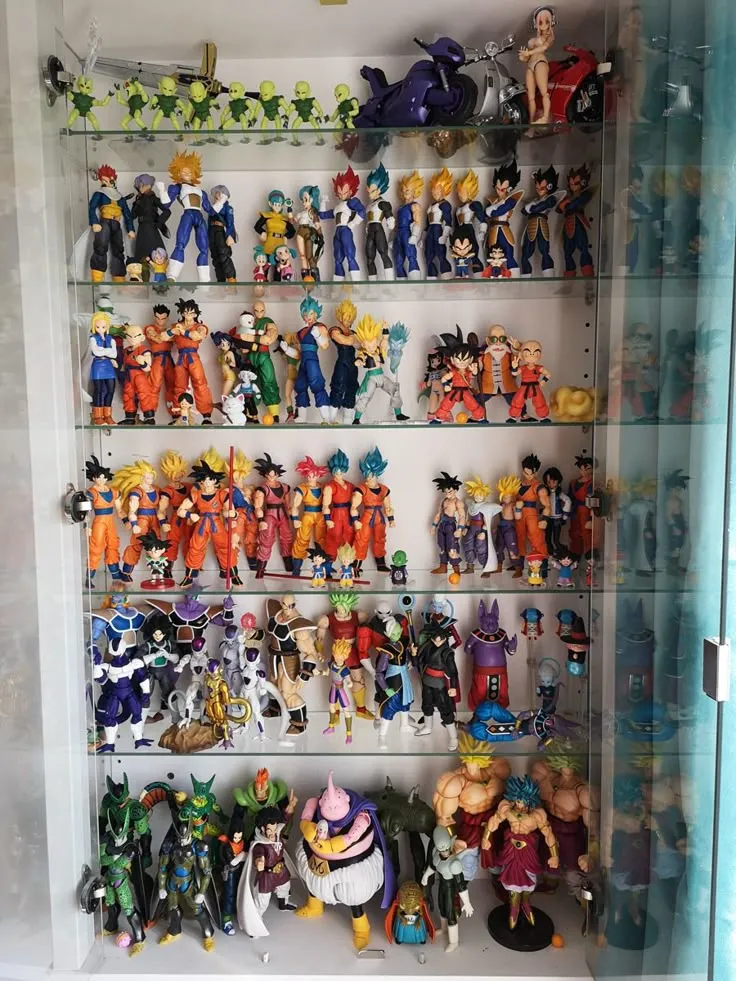
There's a moment every collector knows. It usually happens around 11 p.m., somewhere between assembling a third detolf-style display case and realizing your roommate has started using your Ita-bag as a doorstop. You look around your 400-square-foot studio — the one where your bed, desk, kitchen, and entire romantic life share the same zip code — and you count the boxes.
Not the figures. The boxes. Stacked in the closet. Wedged under the bed. One is functioning as a nightstand. Another is holding up the Wi-Fi router like a load-bearing wall.
The rent is too high and the square footage is too small, and yet the pre-order backlog says: we arrive in March. All of us. At once.
The Math That Nobody Does Before Clicking "Pre-Order"
Here's a fun exercise. Take your current shelf space in linear inches. Now estimate your 2026 delivery schedule. If the second number is bigger than the first — and for most American collectors it's not even close — congratulations, you have what the community politely calls a "space management situation" and what everyone else calls a fire hazard with aesthetic lighting.
The problem is uniquely brutal in the US, where the average young renter's living situation ranges from "shared two-bedroom with three strangers" to "converted closet in a city where studios cost more than a car payment, insurance, and groceries combined." Japanese collectors deal with tiny apartments too, sure — but the American collector also has to explain to a landlord why there's a 1/1-scale acrylic standee registry taped to the door in case of emergency.
So what do you actually do when the collection outgrows the apartment? We talked to collectors who've faced the crisis head-on. Their answers split cleanly into two camps: the engineers and the editors.
The Engineers: Squeezing Blood From a Shelf
The engineers never cull. They optimize.
- Vertical is a lie you tell yourself until it isn't. Wall-mounted floating shelves above doorframes, above the bed, above the toilet if your figure budget outweighs your dignity. One collector in Ohio runs three staggered shelves in the gap between his ceiling and his window blinds — a strip of wall most people use for nothing.
- Risers inside risers. Acrylic step displays effectively double your depth. A four-inch-deep shelf becomes two rows. Suddenly your IKEA Detolf isn't a cabinet, it's a stadium with mezzanine seating.
- The under-bed kingdom. Flat storage boxes for the boxed collection, with the rotating "active display" living topside. It's like a museum archive with a very small gallery.
- Diorama consolidation. One collector replaced five separate figure displays with a single modular celestial diorama — cloud bases, halo lighting, interchangeable parts — where the scene is the collectible and the figures are guests who rotate through it.
That last one is a glimpse of the future, honestly. When space is the constraint, the display itself becomes the art piece.
The Editors: The Twelve Chosen Ones
Then there's Maya, a collector in Austin who did something most of us whisper about at 2 a.m. and never actually do. She went from roughly 200 figures to twelve.
Twelve. Chosen ones.
"It started as a temporary cull before a move," she told us. "I packed my absolute favorites first — the figures I'd grab in a fire, the ones that got me through specific years of my life. Then I looked at everything else and realized I was storing cardboard for characters I hadn't thought about since 2021."
Her criteria, refined over three painful weekends:
- Does it represent a story, not just a series? A figure tied to a specific memory stays. A figure that's "from a show I liked" goes.
- Would I buy it again today, at full price? Not at a discount. Today. Full freight.
- Does it earn its shelf inches visually? Some figures are gorgeous in a vacuum and dead weight in a cramped display. Scale, pose, and silhouette matter more when real estate is scarce.
- The one-year glance. If she hasn't genuinely looked at it in a year — not glanced, looked — it goes in the sell pile.
The result: a single cabinet, museum-quality lighting, twelve figures with room to breathe. "My collection finally looks like a shrine instead of a storage unit," she says. "And weirdly, I love the twelve more now that they're not competing with a hundred roommates."
She sold the rest over six months, made back enough to fund her wedding venue deposit, and reports zero regrets. Her partner reports a functioning apartment.
Rotation: Self-Care or Heresy?
Which brings us to the debate that tears apart Discord servers: is it okay to rotate figures in and out of storage?
The pro-rotation camp argues it keeps the display fresh, prevents dust damage and PVC leaning, and lets you actually appreciate pieces that would otherwise be background noise. Your collection isn't shrinking — it's curating in seasons. The figures in storage are on sabbatical, not in exile.
The anti-rotation camp, meanwhile, thinks it's cope with extra steps. "If a figure only brings you joy when it's new, it was never a keeper," one collector told me, with the confidence of someone who has never once reconsidered a purchase. "Half your collection living in a box under the bed is just a slow-motion sell-off with better PR."
There's no ruling here. But a middle path exists: rotate by arc or season. Your winter display features the melancholy, snow-scenery pieces; summer brings the bright beach and festival figures. Your collection tells a calendar story, and nothing stays boxed long enough to be forgotten. It's less betrayal, more dramaturgy.
A Modest Proposal for the Space-Poor
If you take one thing from this: stop measuring your collection in units and start measuring it in inches of joy per shelf. A crowded shelf of forty figures you don't look at is worth less than eight that stop you in your tracks every morning.
The backlog will keep growing. The apartment will not. Somewhere between the engineers and the editors is a version of this hobby that fits your actual life — not the life you'll have when you finally buy a house with a collectibles room, which, let's be honest, is a pre-order with no release date.
Measure your walls. Count your inches. And be honest about the twelve.
Are you a space-crunched collector with a display hack we need to see? Drop it in the comments — the best shelf-squeeze gets featured in a future column.