The Capsule Economy: What 500 Yen at a Gachapon Machine Taught Me About Waiting, Wanting, and Spending Smart
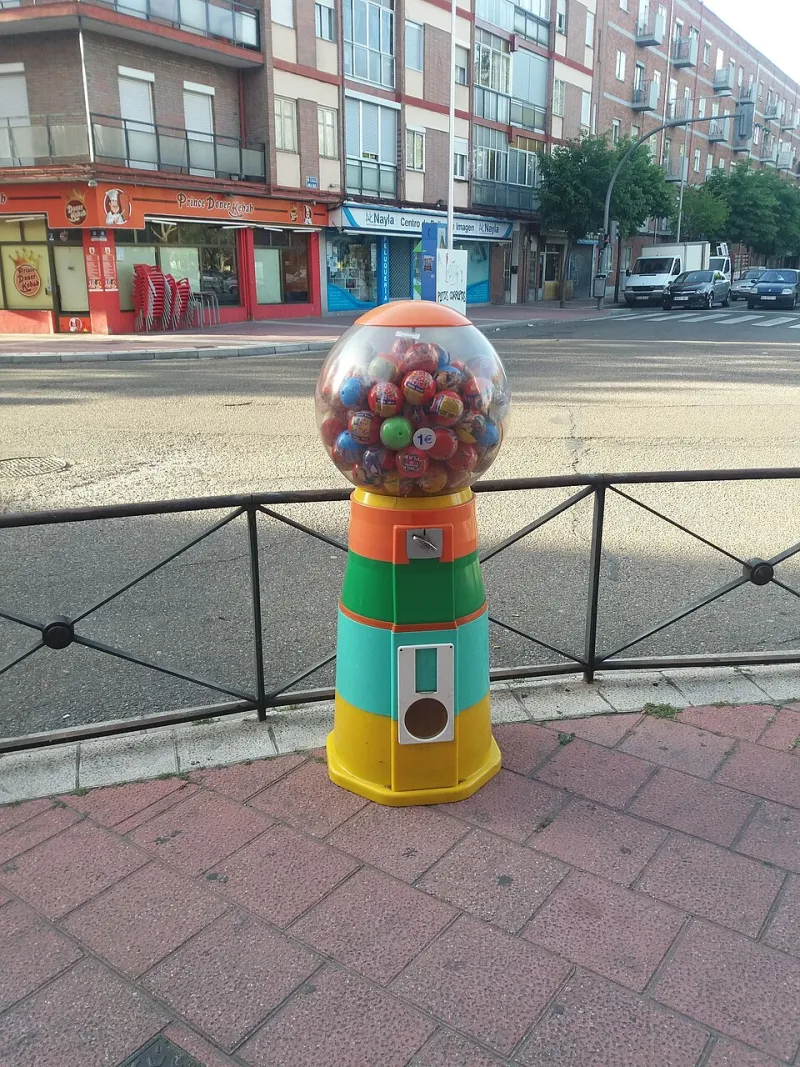
Photo: MiguelAlanCS, CC BY-SA 4.0, via Wikimedia Commons
I've deleted more budgeting apps than I can count. Mint died on its own, but YNAB, Rocket Money, a spreadsheet my sister swore by — I abandoned all of them within a month. Then a gachapon machine outside a ramen shop in Little Tokyo, Los Angeles, taught me more about my own spending brain in six months than a decade of financial advice. I'm not kidding. Stick with me.
The Rules of the Capsule
Here's the thing about gashapon: the machine doesn't care about your feelings. You put in your coins, you turn the knob, and you get what you get. There's no algorithm curating the outcome, no one-click purchase, no 'buy now, pay later.' The entire transaction takes ten seconds and costs about the same as a fancy coffee — and because of that, every single turn is a decision you actually have to make.
Compare that to American consumer culture, which is engineered to remove every point of friction between wanting and having. Amazon has made impulse buying a science. Temu sends me push notifications like a needy ex. The average US checkout flow is designed so you never once have to ask, 'Do I actually want this?'
The capsule machine asks that question every time. And that question, repeated weekly, is basically financial training.
My $12 Angel Budget
When I got home from that trip, I gave myself a rule: $12 a month on gashapon, cap figures and kawaii keychains only, no exceptions. Twelve dollars. That's it. It sounds trivially small, but that constraint is the whole point.
With only a few turns available each month, every purchase becomes a real choice. Do I burn two turns on the cat-ear figurine set I've been eyeing, or take one gamble on the blind capsule series with the secret rare? Suddenly I'm doing math. Suddenly I'm researching — is this series still in circulation, what's the resale market like, has anyone on the gacha subreddit pulled a dud from this machine?
Without realizing it, I'd started doing due diligence. On a $4 toy. The same muscles that evaluate a stock or a car or an apartment, flexed on a tiny angel figure with chibi wings.
Delayed Gratification, Deluxe Edition
Gashapon is the gateway drug. The harder discipline comes from pre-order culture.
If you've never pre-ordered a scale figure, here's how it works: you see the prototype, you put down a deposit or commit, and then you wait. Eight months. Sometimes fourteen. Your prize ships when it ships. There is no instant gratification available at any price.
The first time I pre-ordered a figure — a 1/7 scale of a winged character I'd loved since high school — the wait felt unbearable. By month five, something shifted. I'd stop checking the order status weekly. I'd think about her occasionally, this small future joy sitting somewhere in a warehouse in Chiba, and the anticipation itself became part of the value. When she finally arrived, the unboxing was genuinely one of the better days of that year.
Psychologists call this 'anticipatory pleasure,' and it's something American consumer culture has essentially deleted from our lives. Same-day delivery means we've optimized the waiting out of everything — and the waiting, it turns out, was doing emotional work. My pre-order calendar now functions as a kind of distributed joy schedule. Something good is always coming. I just have to be patient.
Value Judgment Is a Skill, Not a Vibe
Here's what a capsule habit really hones: the ability to distinguish between 'I want this' and 'I want to want this.'
Every collector knows the feeling of a shelf grave — the impulse buy that seemed essential at 11 p.m. and means nothing three weeks later. Gashapon, with its low stakes and high volume, is the perfect training environment for recognizing that feeling in miniature. When a $5 turn produces a duplicate, you learn that a dud is survivable. That lesson scales. When a $400 figure announcement drops and my pulse spikes, I now know to ask the capsule questions: Is this the character or the hype? Will I still care in eight months? Does this fit my collection, or is it just shiny?
Practical Tips for the Kawaii-Minded Spender
If you want to steal my system, here it is:
- Set a hard monthly cap — small enough that every purchase is a decision, big enough that it stays fun. Mine is $12; yours might be $40.
- Keep a want-list, not a cart. Anything I want goes on a list with the date. If I still want it in 30 days, it graduates. Most things don't.
- Embrace the pre-order wait. Schedule your joy. Future-you gets a gift, present-you gets practice being patient.
- Audit your shelf quarterly. What did you actually display, photograph, or think about? That's your real value data.
- Let some turns be gambles. Not every dollar needs to be optimized. A little mystery is why we fell in love with these machines in the first place.
The Angel on Your Shoulder
The JP Angels ethos, at least the way I see it, is that kawaii culture isn't just cute — it's quietly wise. The capsule machine, the pre-order cycle, the ita-bag assembled one pin at a time: these are rituals that reward patience, punish impulse, and celebrate small, deliberate joys.
My budgeting apps tried to make me feel guilty. The gashapon machine just made me think. Guess which one stuck.
Turn the knob. Take what you get. Want what you have. That's the whole philosophy — and it fits in the palm of your hand, inside a plastic egg, for about the price of a latte.